
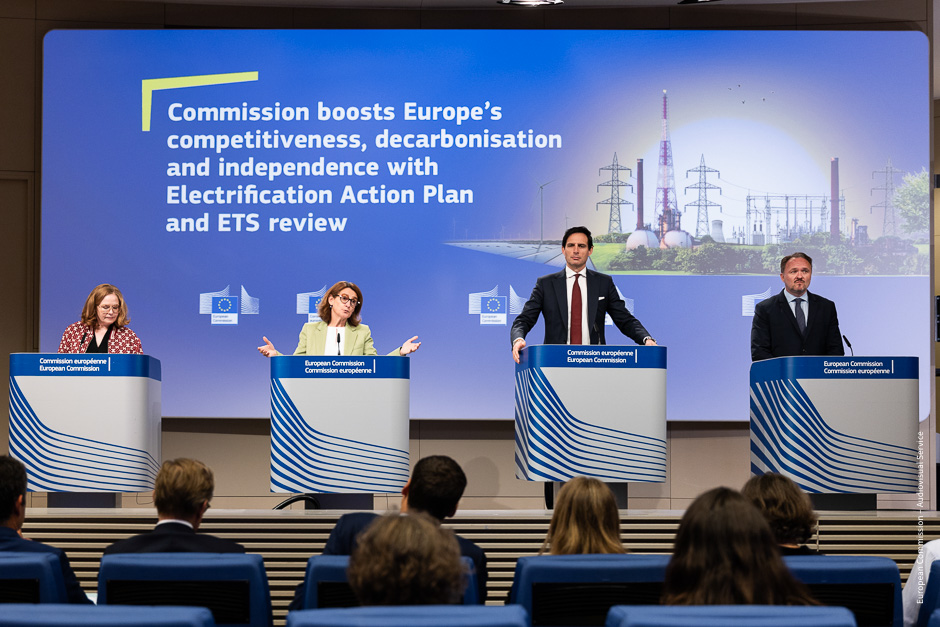
EU ETS to cover waste incineration from 2031 – landfill monitoring may follow. Phase-in, opt-outs and a looming diversion risk to landfill all feature in the Commission’s new proposal.
Key Takeaways
- Waste-to-Energy is to be included in the EU Emissions Trading Scheme (EU ETS) from 2031, with allowance obligations being phased in gradually: from 25 per cent (2031) to 100 per cent (2034).
- District heating from Waste-to-Energy plants keeps free allowances; electricity generation does not.
- States can opt out until 2035 if meeting two of three conditions: carbon tax, recycling, landfill targets.
- Landfill monitoring may start in 2031, or slip to 2034 if a BAT reference document and a comprehensive landfill register are not in place in time.
- Commission warns pricing incineration risks diverting waste to landfill instead.
With the reform of the EU Emissions Trading Scheme (EU ETS), published on 17 July 2026 as COM(2026) 616, the European Commission aims to include the waste-to-energy sector in the trading scheme. In addition to the first-ever inclusion of waste incineration in the CO₂ market, the changes also include new monitoring obligations for landfill sites. Both measures amend Directive 2003/87/EC, which has formed the legal basis of the EU Emissions Trading Scheme since 2005.
Under the EU ETS as it currently stands, installations dedicated to burning municipal or hazardous waste are excluded from the scheme. Annex I to Directive 2003/87/EC defines the system’s first activity as “combustion of fuels in installations with a total rated thermal input exceeding 20 MW”, but explicitly adds the exception “except in installations for the incineration of hazardous or municipal waste”, as confirmed in the Commission’s own guidance on the interpretation of Annex I. Only co-incineration, where waste is burned alongside conventional fuels in industrial plants such as cement kilns, has been covered from the outset.
This exclusion was narrowed once before. Directive (EU) 2023/959, part of the 2023 “Fit for 55” revision, added a monitoring and reporting obligation, without a surrender obligation, for municipal waste incineration installations above 20 MW from 1 January 2024. That change was designed to gather emissions data ahead of a feasibility assessment on full inclusion, due under Article 30(7) of the Directive by 31 July 2026. The new proposal is the outcome of that assessment: it deletes the municipal waste exemption from Annex I and creates a dedicated activity for non-hazardous waste incineration and co-incineration, with a capacity threshold of three tonnes per hour aligned with the Industrial Emissions Directive. The exemption for hazardous waste incineration remains unchanged.
According to the Commission, emissions from municipal waste incineration amount to around 40 million tonnes of CO2 equivalent per year and have largely not been subject to a dedicated carbon price. Only a handful of member states currently price these emissions outside the EU ETS: Denmark, Sweden and Lithuania have included municipal waste incineration in their national implementation of the scheme, Germany applies a national emissions trading system, and the Netherlands has introduced a carbon levy on such emissions.
Phased Introduction From 2031
Operators of installations newly brought into the scheme would not have to surrender allowances for all of their emissions immediately. Instead, the obligation is phased in: 25 per cent of verified emissions reported for 2031, 50 per cent for 2032, 75 per cent for 2033, and 100 per cent from 2034 onwards. The number of allowances added to the EU-wide cap would rise in step with this schedule, from 10.2 million in 2031 to 36 million in 2034, thereafter subject to the system’s annual reduction factor.
Member states would be able to apply for a temporary opt-out from the surrender obligation until the end of 2035, provided they can demonstrate that they meet at least two of three conditions: a national carbon tax higher than the average EU ETS auction price, being on track to meet EU municipal waste recycling targets set out in Directive 2008/98/EC (the Waste Framework Directive), and being on track to meet the EU municipal waste landfill target under Article 5(5) of the Landfill Directive. Installations located in the outermost regions of the EU could also be temporarily exempted from the surrender obligation until 31 December 2035.
Support Measures For The Transition
The proposal pairs the new obligation with several support measures. Waste-to-energy plants supplying district heating would remain eligible for free allocation of allowances, while electricity generation from such plants would not, in line with existing rules for the power sector.
Supporting local authorities in implementing waste management measures higher up the waste hierarchy, such as separate collection and sorting, would be added to the list of priority purposes for which member states must use at least half of their EU ETS auction revenues. Technologies that reduce emissions from waste incineration, including carbon capture, would be eligible for funding from the Industrial Decarbonisation Bank, the Innovation Fund and the Modernisation Fund.
Landfilling: Monitoring First, Decision Later
Landfilling has never been covered by the EU ETS, either for monitoring or for allowance surrender. Emissions from waste disposal have so far fallen under the national targets of the Effort Sharing Regulation instead. The proposal stops short of an immediate carbon price for landfills.
It instead creates a new Annex I activity limited to monitoring, reporting and verification of emissions from the disposal of non-hazardous waste. Introducing this monitoring obligation is conditional on two developments: the establishment of a “Best Available Techniques” reference document for landfills, and a comprehensive landfill register to prevent circumvention. The Commission is to report by 31 July 2029 on whether these conditions have been met. If they have not, the start of landfill monitoring would be postponed from 2031 to 2034, aligning it with full implementation of the incineration obligation.
According to the Commission’s impact assessment, EU landfill emissions stood at 65.3 million tonnes of CO2 equivalent in 2023 for managed sites, plus a further 8.6 million tonnes for unmanaged sites, based on historical disposal of all solid waste. Landfill emissions have fallen by 55 per cent since 1990, largely due to reduced landfilling of biodegradable waste and increased methane recovery, but continue to represent the largest single source of greenhouse gas emissions from the waste sector because of methane’s high global warming potential.
Guarding Against Landfill Diversion
The Commission has linked the phased approach to concerns raised during its consultation process that pricing incineration without also addressing landfilling could push waste away from incineration towards the cheaper option of landfilling, working against the EU’s waste hierarchy, which prioritises prevention, reuse and recycling over disposal under Article 4 of the Waste Framework Directive. Under Article 5(5) of the Landfill Directive, member states are required to reduce the amount of municipal waste sent to landfill to 10 per cent or less by 2035. The Commission states that this risk is partly mitigated because emissions from sustainable biomass in incineration are zero-rated, reducing the incentive to divert organic waste to landfill, but acknowledges that a risk remains for waste containing fossil-based material where landfill taxes or bans are not in place.
The measure is intended to work alongside a forthcoming Circular Economy Act, which is expected to strengthen recycling, reuse and waste prevention policies. The Commission is required to review Directive 2003/87/EC in light of these developments, including any unintended consequences, by 31 December 2034.
Consultation Responses Were Divided
In the Commission’s open public consultation, a majority of respondents, including companies, business associations, NGOs and environmental organisations, supported bringing municipal waste incineration into the EU ETS, most commonly citing the incentive it would create for recycling. Extending carbon pricing further, to hazardous waste incineration or to landfilling, drew more divided responses.
Two fifths of the respondents opposing the inclusion of municipal waste incineration cited the risk of waste being diverted to landfill as their main concern, while some supporters of inclusion said this risk should be addressed through other means, such as stronger enforcement of existing landfill rules or landfill taxation, rather than by withholding action on incineration.


Leave a Reply