

EU widens ETS to waste incineration from 2031. FEAD warns of double carbon costs and calls for polluter-pays rules upstream.
Key Takeaways
- EU Commission’s 17 July 2026 ETS revision extends carbon pricing to non-hazardous waste incineration from 2031, phased in until 2034.
- FEAD warns of double carbon pricing where national levies already apply to operators.
- FEAD wants polluter-pays rules extended upstream to producers of non-recyclable materials.
- FEAD says circularity and recycling must stay central; carbon capture isn’t viable everywhere.
- FEAD urges ETS revenues be reinvested in the sector, excluding legacy landfill emissions.
“The Commission’s proposal has a major direct impact on the waste management sector,” said Paolo Campanella, Secretary General of the European Waste Management Association (FEAD). He said the sector has long contributed to Europe’s climate and circular economy objectives through an integrated approach based on the waste hierarchy. As the legislative process moves forward, he said it will be essential to provide operators with a stable and predictable investment framework that supports effective decarbonisation while recognising the complementary role of all waste treatment operations.
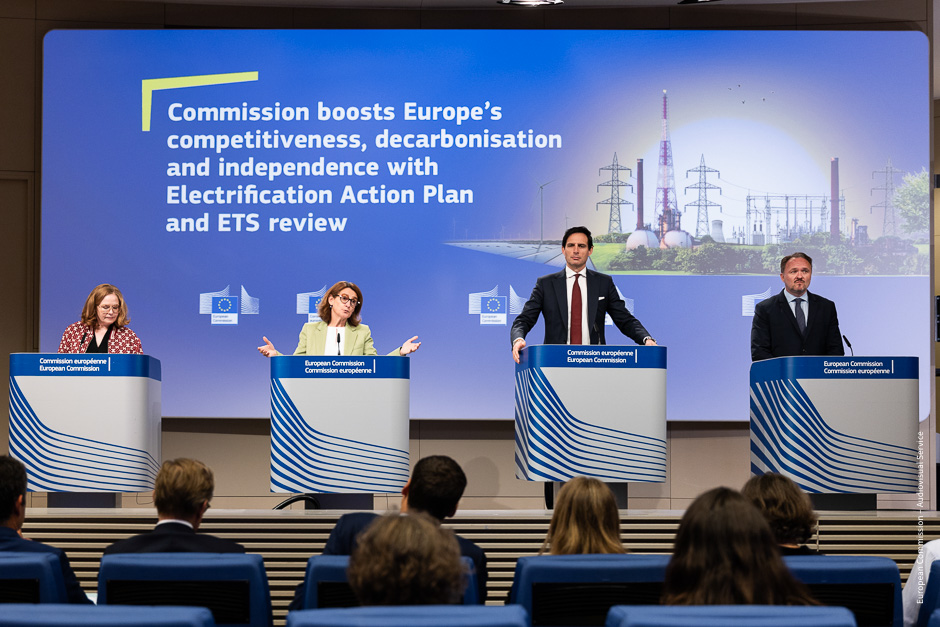
FEAD’s reaction follows the European Commission’s proposal, published on 17 July 2026, to revise the EU Emissions Trading System (ETS) and align it with the bloc’s 2040 climate target. The proposal extends the ETS to non-hazardous waste incineration and co-incineration installations from 2031, with a gradual phase-in until 2034.
FEAD’s Demands For The Legislative Process
FEAD has set out seven points for the legislative discussions ahead.
1. Avoiding Double Carbon Pricing
Including Waste-to-Energy in the ETS should not result in double taxation for operators that are already subject to national carbon taxes or equivalent environmental levies, FEAD said.
2. Extending The Polluter Pays Principle Upstream
FEAD said producers of non-recyclable products and materials should bear responsibility for the residual waste and emissions those products generate, rather than leaving these costs to waste operators and, ultimately, citizens.
3. Keeping Circularity Central to Decarbonisation
Emissions reductions from incineration plants cannot be pursued in isolation, FEAD said. They must go alongside improved collection, sorting and recycling of plastics, with safeguards that keep the waste hierarchy at the centre of policy.
4. Recognising The Limits of Carbon Capture
Carbon capture technology is not technically or economically deployable at every incineration plant, FEAD said. It called on the revised ETS and its funding instruments to recognise this and to support a realistic mix of decarbonisation pathways, rather than assume uniform carbon capture uptake across the sector.
5. Excluding Legacy Emissions from Landfill Monitoring
FEAD said the inclusion of landfills for monitoring, reporting and verification (MRV) purposes must not cover emissions from waste that was landfilled in the past. It also noted there is currently no standardised method for measuring and quantifying diffuse methane emissions, which it described as a significant challenge still to be addressed.
6. Reinvesting ETS Revenues in The Sector
Revenues generated by Waste-to-Energy installations should support decarbonisation of the waste management sector and the transition towards higher levels of the waste hierarchy, FEAD said. It welcomed the Commission’s proposal to strengthen the use of ETS revenues in two ways.
7. Linking Carbon Removals to Allowances Directly
FEAD supports a one-to-one link between verified carbon removals and ETS allowances, based on a system it said should be practical for operators and should avoid unnecessarily complex installation-level calculations.
Background to The Proposal
Besides the extension to incineration, the Commission’s ETS proposal covers carbon capture, carbon removals and increased support for industrial decarbonisation, including a new Industrial Decarbonisation Bank and stronger investment requirements for member states.
Member states may apply a temporary national opt-out from the incineration extension where equivalent measures are already in place. Hazardous waste treatment remains excluded from the ETS, which FEAD said recognises the sector’s role in protecting human health and the environment.
The proposal also introduces MRV requirements for non-hazardous landfills and expands the use of ETS revenues to support waste prevention, reuse, recycling and other measures higher up the waste hierarchy.


Leave a Reply