
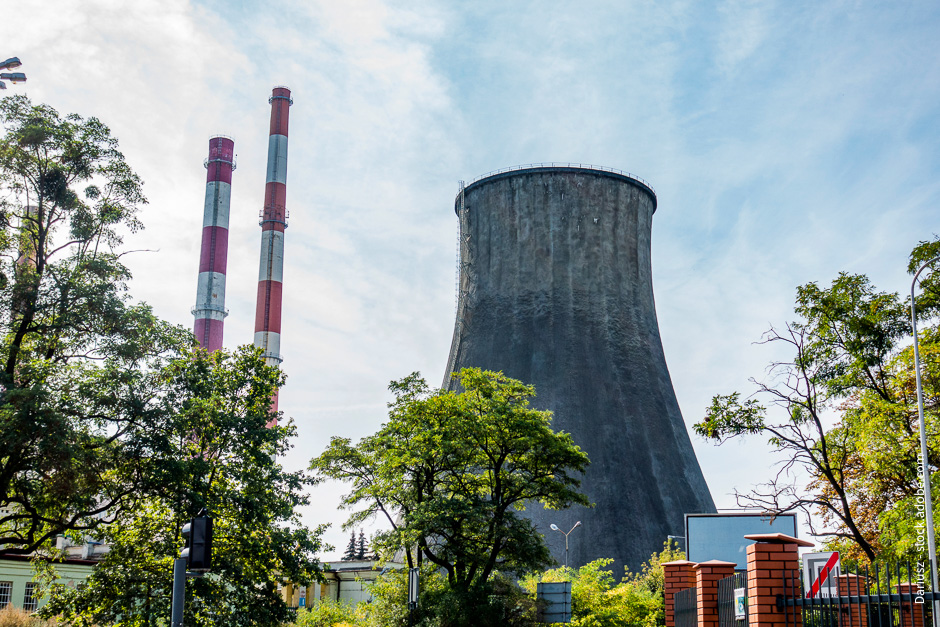
A plan to co-incinerate RDF in Polish heating plants has sparked fierce opposition. Industry experts warn of significant environmental risks and unfair market conditions.
Key Takeaways
- SPEO opposes the co-incineration of RDF in Polish heating plants, citing significant environmental risks and unfair market conditions.
- The association criticises the lack of proper testing, arguing that short combustion trials cannot ensure compliance with environmental standards.
- They express concerns that the proposal distorts competition by exempting some installations from pollution requirements.
- SPEO highlights contradictions with Poland’s Waste Act and EU directives that promote phasing out fossil fuels.
- The association calls for the withdrawal of the proposal, urging adherence to strict requirements for waste incineration.
The Polish Association of Waste-to-Energy (WtE) plant operator SPEO has submitted a formal objection to the Ministry of Climate and Environment regarding a proposal for the co-incineration of Refuse-Derived Fuel (RDF) in heating plants. Furthermore, the association stated its firm opposition to plans that would allow a fuel share of up to 10 per cent from RDF in heating installations. These plans would not apply the same uniform requirements that all facilities incinerating or co-incinerating waste must meet.
The organisation noted that the Waste-to-Energy sector has made significant investment and operational expenditures to comply with stringent pollution control standards. In addition, it expressed that a proposal with such a significant potential impact on the market was not previously consulted with key industry stakeholders, including SPEO.
Insufficient Testing and Environmental Risks
According to the association, a preliminary analysis indicates that the proposed few-day combustion trials of RDF in boilers adapted to the Medium Combustion Plant (MCP) directive will be insufficient. SPEO stated these tests cannot prove the installations would meet the full scope of the Industrial Emissions Directive (IED). The IED includes limits for dioxins, heavy metals, and other pollutants. It also requires continuous monitoring and emergency procedures.
Consequently, such a test cannot guarantee environmental safety or compliance with European standards in a manner comparable to modern waste incineration plants. Moreover, the proposal also presents a risk to the public perception of heating plants. These plants could be seen as waste incinerators, potentially leading to local conflicts and a loss of public trust.
Concerns Over Market Distortion
SPEO argued that the proposal would distort competition. The fulfilment of environmental requirements by modern incineration plants is a significant cost factor. The association stated there is no justification for exempting a group of installations from certain requirements, thereby privileging them over competitors that meet all standards. In addition, this could raise objections from the perspective of the EU’s “technological neutrality” principle.
The organisation believes these proposals could fundamentally affect market stability and favour certain entities without providing lasting environmental benefits. On the contrary, it could perpetuate the current situation by halting decisions to build much-needed modern waste management infrastructure in Poland. It could also promote the continued use of coal.
Contradiction with Legal and EU Directives
The association highlighted that the plan is inconsistent with Poland’s Waste Act, which stipulates that waste must be incinerated in designated facilities. A historical analysis of regulations shows a consistent legislative trend towards tightening the conditions for waste co-incineration. Previously, a provision allowed up to one per cent of waste to be co-fired without stricter emission standards. However, this was removed from the currently binding regulation in 2011, a move SPEO interprets as a deliberate tightening of the law.
Furthermore, the proposal is seen as short-sighted in the context of the EU’s Fit for 55 package and the Energy Efficiency Directive (EED). These directives aim to phase out fossil fuels. In contrast, the proposal, in the association’s view, cements the status quo of a coal-dominated heating mix.
SPEO has appealed for the withdrawal of any legislative plans that would permit the co-firing of RDF in coal-fired boilers. It also called for the maintenance of rigorous requirements compliant with the Ied for all waste incineration.



Leave a Reply