
Key Takeaways
- Cewep and Eswet’s recent event in Brussels indicated that the waste-to-energy sector will likely join the EU emissions trading scheme by 2031.
- The costs of inclusion could total around 4.2 billion euros annually for waste incinerators based on current CO2 permit prices.
- European regulations for CO2 pricing vary, which complicates the Commission’s goals for a cohesive internal market for secondary raw materials.
- Landfill operators may face exclusion from the EU ETS, raising concerns over price competition compared to landfilling.
- Stricter landfill regulations under the Circular Economy Act could emerge, but successful implementation will depend on national authorities.
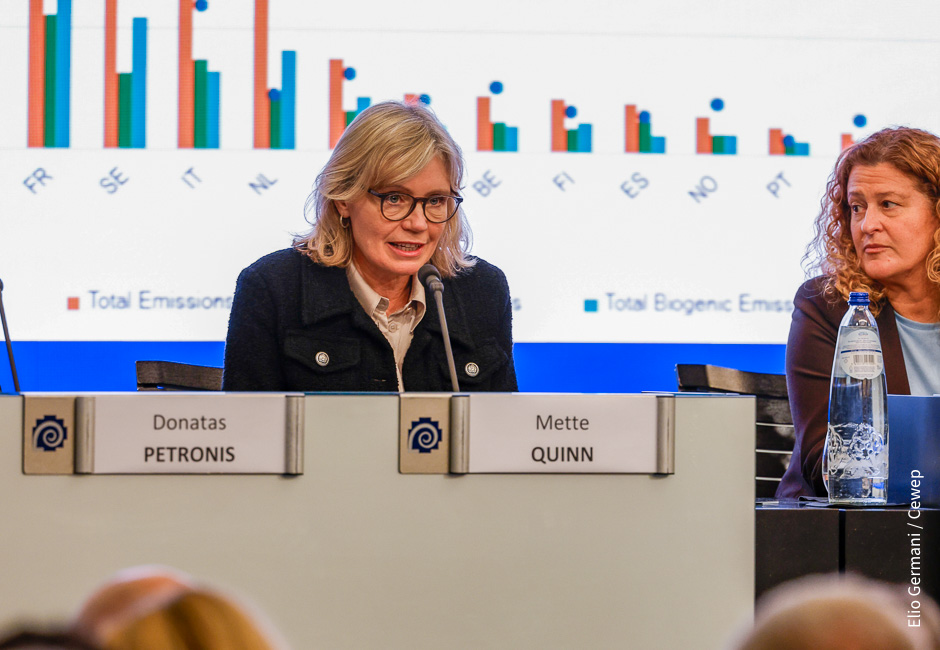
Last week, the two associations Cewep and Eswet organised an event in Brussels on emissions trading. The European Commission was represented by two officials: Mette Koefoed Quinn and Karolina D’Cunha. And the remarks made by the two Commission officials leave no room for doubt. The waste-to-energy sector in Europe is likely to be included in the emissions trading scheme – albeit not until 2031.
In July, the Commission will publish an impact assessment on the inclusion of waste incineration in the EU ETS. It is obliged to do this following the previous ETS revision. Naturally, the two Commission representatives did not prejudge the outcome of this impact assessment. However, in their statements, neither Quinn nor D’Cunha put forward any arguments as to why the waste-to-energy sector does not belong in the ETS.
Significant Costs
The costs of inclusion would be significant. According to Cewep Managing Director Ella Stengler, the sector most recently emitted around 42 million tonnes of fossil CO2. Assuming a permit price of around 100 euros per tonne, Europe’s waste incinerators would therefore have to pay around 4.2 billion euros annually.
Cewep estimates that at this price level, the cost of incineration would rise by 52 euros per tonne across Europe.
The start date remains open. 2028 would be the earliest possible date for inclusion. But there is no longer any talk of this – partly because, according to industry representatives, there would be too little time for the legislative process. One slide in Quinn’s presentation stated “Earliest 2030 if proposal to include MWI” – so no one should expect thermal waste treatment to be included in the EU Emissions Trading Scheme before 2030. Industry representatives even expect the waste sector to be included in trading only in 2031. That is when the new trading period of the EU ETS begins. The transition would be seamless.
European Fragmentation
There is also strong evidence to suggest that the Commission will link the reform of emissions trading to the forthcoming Circular Economy Act (CEA).
After all, strengthening the internal market for secondary raw materials and recyclates is the Commission’s stated objective for the CEA. This act is also expected in the third quarter. It is precisely this internal market that could be disrupted by differing regulations on CO2 pricing for waste incineration.
This is precisely the reality at present. Europe is a patchwork of regulations, as was made clear in a slide shown by Stengler. According to this, there are thermal waste treatment plants in 24 countries across Europe – including non-EU members such as the UK, Norway and Switzerland. Nine countries have incineration and/or CO2 taxes.
Three countries have national systems comparable to the EU ETS. In two countries (Sweden and Lithuania) plant operators are already obliged to participate in the EU Emissions Trading Scheme. And in one country – namely Denmark – plant operators must both participate in the EU ETS and pay a national CO2 tax. This European fragmentation is extremely confusing and difficult to reconcile with the Commission’s objectives.
Landfill Operators Potentially Left Out
Waste disposal is a price-sensitive service. With a surcharge of around 50 euros per tonne, the price gap compared to landfills in Europe widens significantly. As a result, the incentive to illegally transport waste to EU countries with high landfill rates also increases.
It was not entirely without reason that Europe’s waste-to-energy plant operators advocated including landfills as well if waste incineration were to be incorporated into the EU ETS. After all, the landfilling of untreated municipal waste produces methane-rich landfill gases that are far worse for the climate than the CO₂ emitted from the chimneys of incineration plants.
However, those familiar with the Brussels scene say that including landfill operators is particularly difficult from a political perspective. Landfilling occurs mainly in the poorer EU countries. The permit prices for the significantly more climate-damaging methane emissions from landfills could place an excessive burden on these countries. Their resistance could block the entire reform.
Stricter Landfill Rules Under The CEA?
Here too, the fact that the Commission’s ETS impact assessment and the CEA are taking place simultaneously could help resolve the impasse. At the event in Brussels, Karolina D’Cunha, Head of the ‘From Waste to Resources’ unit in the Directorate-General for the Environment, hinted at stricter regulation of landfills under the CEA.

Waste incineration in emissions trading, stricter rules for landfills through the CEA – whether this can prevent “carbon leakage” towards landfills remains to be seen. This is because emissions trading applies directly, whilst the “stricter rules” – whatever they may ultimately entail – would have to be implemented by national enforcement authorities. The failure to implement European waste legislation is a classic issue in infringement proceedings.
However, Europe’s waste-to-energy plant operators can also hope for support from Brussels. This is because revenue from emissions trading flows into the Innovation Fund, which supports companies in decarbonisation. Support for CCUS is also available, according to the Commission representatives.

Leave a Reply