
A €567M Dutch tax package is causing concern. Industry leaders warn of market distortion and a significant threat to the EU’s circular economy and climate ambitions.
Key Takeaways
- A €567M Dutch tax package raises concerns about market distortion and EU circular economy goals.
- Industry leaders warn the tax could disrupt the internal market and harm climate initiatives.
- Higher national taxes may undermine investments in recycling infrastructure and lead to higher costs for recycled materials.
- There is potential conflict with the European emissions trading system, discouraging investment in carbon capture projects.
- The sector calls for EU policy coherence to support sustainable waste management and investment in recycling.
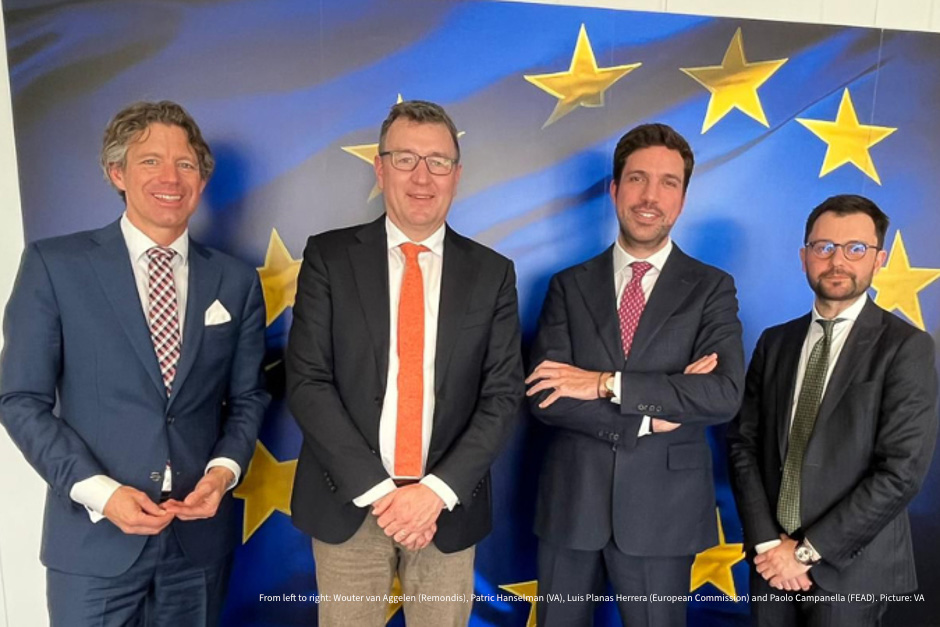
On 9 March, the Vereniging Afvalbedrijven (VA), together with the European recycling industry association FEAD and a delegation from its members AVR and Remondis, met with the cabinet of European Commissioner Roswall. The discussion focused on the impact of a Dutch tax package, amounting to €567 million annually. This package affects circularity, climate targets, and investments within the European context.
The sector argues that the national measures will have consequences not only for the Netherlands but also for the functioning of the internal European market. These measures will also affect the circular economy and European climate policy.
Risk of European Market Distortion
According to the VA, the accumulation of national waste taxes and CO₂ levies will lead to market distortions within the European Union. In fact, if the fiscal pressure in one member state is significantly higher than in neighbouring countries, there is a substantial risk that waste streams and investments will shift to other member states. Furthermore, the dismantling of established circular infrastructure and Waste-to-Energy capacity in the Netherlands cannot be easily replicated in other parts of the European Union. In many of those areas, significant amounts of waste are still being landfilled.
VA director Patric Hanselman stated on behalf of the involved parties, “This leads not to less waste or fewer emissions, but to the displacement of activities, employment, and emissions within Europe.” He added that this undermines both the internal market and the effectiveness of European environmental policy.
Pressure on Circular and Climate Investments
The sector also warns that fiscal uncertainty and national tax increases weaken the business case for new sorting and recycling facilities. This infrastructure requires capital-intensive investments with long payback periods. In addition, a sharp rise in the costs of processing non-recyclable residual streams will affect the entire chain. As a result, this could potentially make recycled raw materials more expensive than primary materials. Thus, it could hamper the development of circular value chains.
“The Netherlands has high-quality infrastructure for resource recovery and sustainable energy. The significantly higher taxes that the Dutch government wants to impose on this sector threaten to undermine this important foundation for the European circular economy,” said Wouter van Aggelen, Director of Corporate Affairs at Remondis. In addition, he stressed the importance of the upcoming European Circular Economy Act in preventing national measures from pressuring European circular value chains and investment capacity.
Conflict With European Emissions Trading System
The parties involved also point to a potential overlap between national CO₂ levies and the European emissions trading system (EU ETS). They explain that if waste incineration plants fall under the ETS in a few years, an additional national CO₂ levy could lead to much higher carbon costs for the same emissions.
According to the sector, this could discourage investments in Carbon Capture and Storage (CCS) and Carbon Capture and Utilisation (CCU) projects, which are necessary for the further decarbonisation of the waste chain. “As AVR, we intend to invest heavily in CO₂ capture, but the stacking of national levies makes the business case unpredictable. As long as there is no level playing field regarding various levies in Europe, CC(U)S decisions may be postponed, and the transition will be blocked,” said Michiel Timmerije, Director of Energy & Residues at AVR.
Call for European Policy Coherence
The sector emphasises that between 30 and 40 million tonnes of non-recyclable, energy-recoverable waste are still landfilled in Europe. Modern facilities could help to process these streams more sustainably while enabling high-quality recycling.
“To achieve the European circular and climate goals, a stable and predictable policy framework is needed that supports, rather than hinders, investments in recycling and decarbonisation”, said Paolo Campanella of FEAD.
The Netherlands has been a European leader for decades, landfilling only 2-3 per cent of its waste, with over 95 per cent being recycled or usefully applied. After the discussion, the cabinet of EU Commissioner Roswall has pledged to consult with other directorates-general within the European Commission. They will further discuss the potential impact of the national measures.


Leave a Reply