
Dutch ministers reject the new waste incineration tax – but with Budget Day looming, what’s the alternative that could cost the sector just as much?

Key Takeaways
- Dutch ministers reject the proposed incineration tax, citing risks to circularity, investment and competitiveness.
- They seek an alternative raising the same revenue before Prinsjesdag (Budget Day).
- The CO2 levy alone could add about €10 per tonne in costs for waste firm ARN.
- MPs have passed motions demanding clearer assessment of impacts on jobs, supply and global emissions.
- A June petition warned the €567m annual rise threatens investment, recycling and sustainability.
The debate over the Netherlands‘ proposed tax on waste incineration and landfill, known informally as the plastic tax, remains unresolved. During a meeting between the Minister for Climate and Green Growth, the State Secretary for Fiscal Affairs and representatives of the waste and recycling sector, including Dutch waste management company ARN, it was reiterated that the proposed levy could significantly harm circularity, investment and the Netherlands’ competitive position, plant operator ARN announced.
Both the minister and the state secretary indicated that they do not support the measure. They would prefer an alternative that raises the same budgetary revenue.
Alternative Needed Before Budget Day
Time is short: an alternative must be presented before Prinsjesdag, the day on which the Dutch government sets out its annual budget. For ARN alone, the CO2 component of the levy could add around €10 per tonne in extra costs.
Concern is growing in The Hague over the risk of deindustrialisation and circular activities moving abroad. The House of Representatives has adopted several motions on the issue, including a call for a clearer assessment of the effects on employment, security of supply and global CO2 emissions.
Sector Petition Warns of €567m Tax Rise
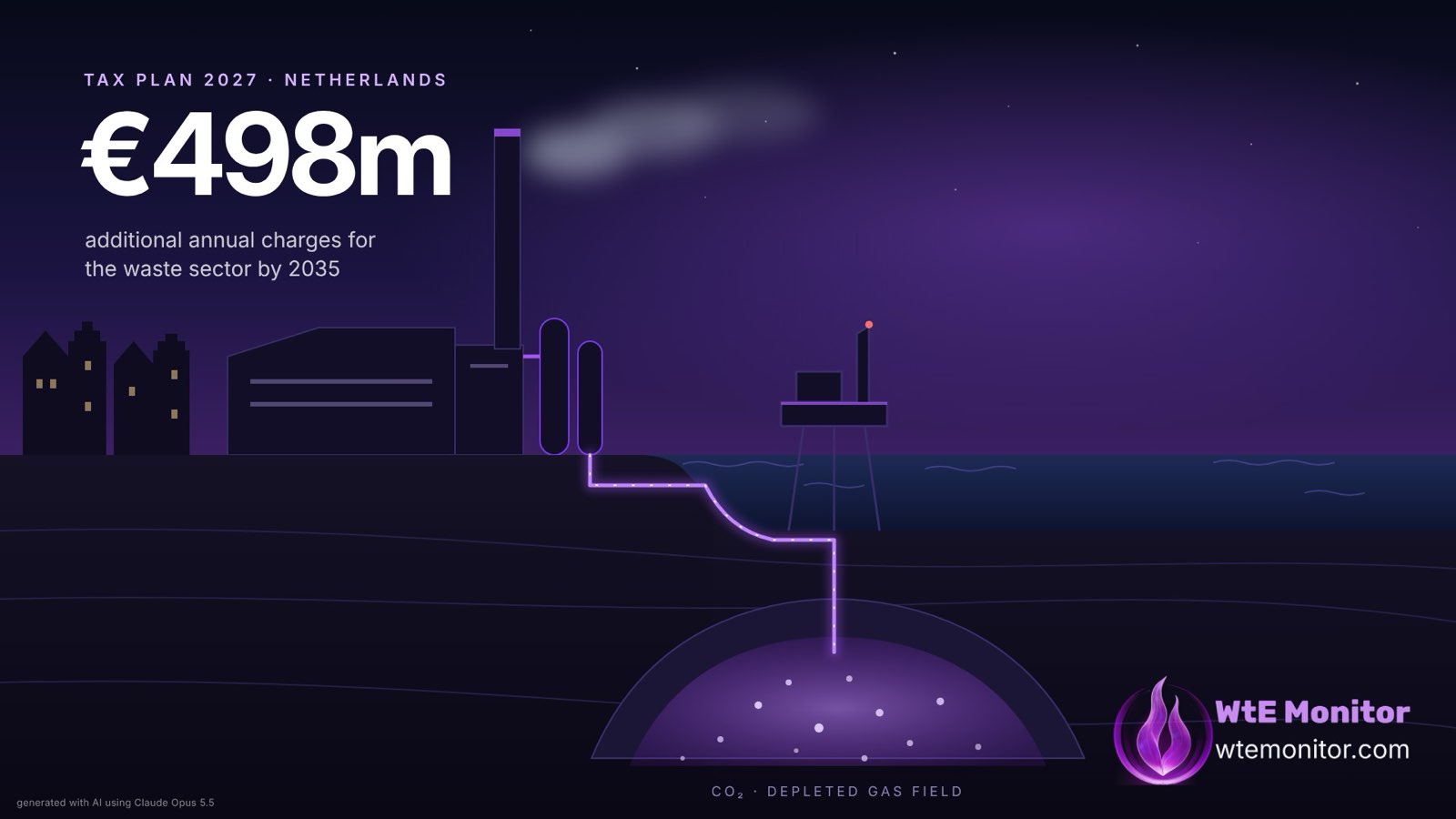
The sector has also raised its own concerns. In early June, a petition was submitted to the House of Representatives warning that the planned tax increase of €567 million a year would put investment, recycling and sustainability efforts under pressure.
The sector is calling for swift clarity, an end to investment uncertainty, and measures that strengthen rather than weaken the circular economy.
Read More
Ask WtE Monitor
Answers come only from WtE Monitor articles and plant data, with sources. Ask in any language.
Your question is processed by Anthropic to generate the answer. Please do not enter personal data. Privacy policy
3 questions a month with a free subscription, unlimited with WtE Monitor+. Subscribe free · Get WtE Monitor+


Leave a Reply