
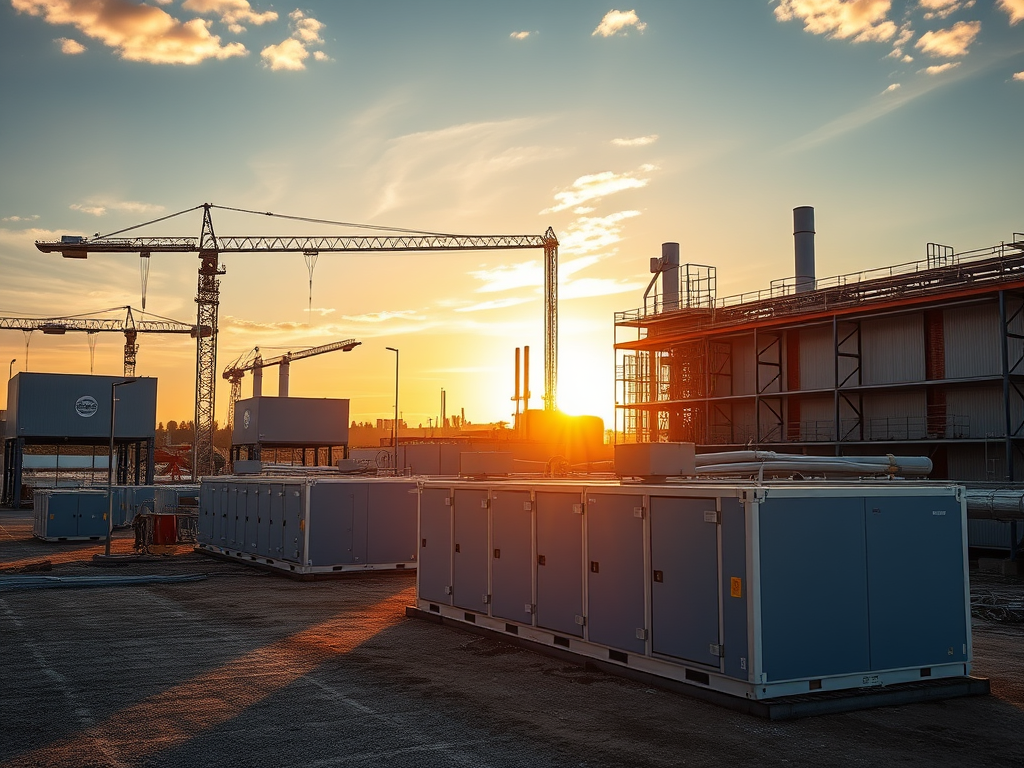
EEW launches its first battery storage project in Premnitz. Discover how this step could shape the future flexibility of waste-to-energy plants and regional energy supply.
Key Takeaways
- EEW launches its first battery storage project in Premnitz, Germany, with a capacity of 15 megawatt hours and an output of seven megawatts.
- This initiative enhances EEW’s baseload power plants by making them flexible storage power stations, contributing to energy supply stability.
- The new battery storage allows for precise electricity storage and release, improving grid stability and accommodating demand peaks.
- EEW invests several million euros in the project, viewing it as a step towards integrating storage solutions at other locations.
- The Premnitz project serves as a blueprint for future energy solutions, highlighting waste-to-energy facilities’ role in a resilient energy infrastructure.
EEW Energy from Waste Group (EEW) has commenced construction of its first battery storage system at the Premnitz site in Germany, marking a significant milestone in the company’s strategic development. In collaboration with technology partner Tricera, EEW is building a storage facility with a capacity of 15 megawatt hours and an output of seven megawatts. This initiative represents a pivotal step in the evolution of EEW’s baseload power plants towards flexible storage power stations.
Joachim Manns, Chief Operating Officer and member of the EEW management board, highlights the forward-looking nature of the project: “With the battery storage system in Premnitz, we are consistently advancing our facilities. We are preparing our power plants for the future: they will remain a stable pillar of energy supply, but will also be able to store energy flexibly and feed it into the grid when needed. In this way, we are expanding our business and making a greater contribution to the stability of the electricity supply.”

Klaus Piefke, Technical Managing Director of EEW Premnitz, outlines the current operations at the site: “In Premnitz, we reliably generate energy from waste in the form of district heating, process steam and enough electricity to supply more than 40,000 households per year.” With the integration of the new battery storage system, this electricity can be utilised more precisely: “We store it when the grid cannot immediately absorb it and release it when required—whether to stabilise grid frequency or to cushion demand peaks. This not only increases the performance and flexibility of our site, but also strengthens security of supply in the region.”
Milestones and Investment in Energy Storage
The initial milestone of the project is the construction of the foundation, which is now underway. Delivery and installation of the storage modules are scheduled for autumn, with commissioning planned for the fourth quarter of this year. EEW is investing several million euros in the construction of the battery storage facility. This investment is regarded as a crucial step that will pave the way for the deployment of storage solutions at other EEW locations.
By integrating battery storage, EEW is pursuing a clear strategic direction: existing baseload power plants are being enhanced to respond flexibly to the demands for electricity, process steam and district heating in an increasingly volatile energy market. The Premnitz site serves as a blueprint for the further development of this technology within the group.
Blueprint for Future Energy Solutions
The expansion of the business field to include innovative storage solutions underlines EEW’s commitment to adapting its operations to the evolving requirements of the energy sector. The integration of battery storage at Premnitz not only increases the flexibility and efficiency of energy from waste operations, but also supports regional supply security and grid stability. This project demonstrates how waste-to-energy facilities can play an integral role in the transition to a more flexible and resilient energy infrastructure.



Leave a Reply