
A new district heating pipeline will supply Senftenberg with waste heat from 2029, saving 19,000 tonnes of CO₂ annually.
Key Takeaways
- A new district heating pipeline will supply Senftenberg with waste heat from 2029, saving 19,000 tonnes of CO₂ annually.
- The project connects the EEW Waste-to-Energy plant in Großräschen to Senftenberg’s municipal heating network, serving 8,000 households.
- Using waste heat will replace fossil fuels, improving energy efficiency and security of supply for citizens.
- The project combines economic activity with climate protection, utilising previously unused waste heat.
- Construction is set to begin in 2027, marking a technological upgrade for the regional energy infrastructure.
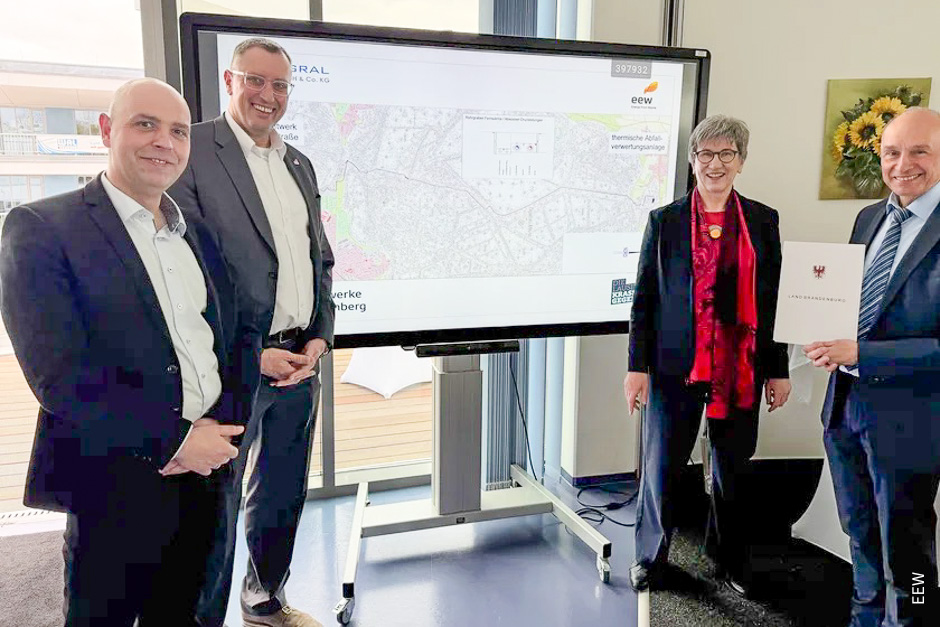
The joint district heating project between plant operator EEW and municipal supplier Stadtwerke Senftenberg is set to proceed. This follows the handover of a funding notice from the state of Brandenburg. From approximately 2029, the project aims to supply around 8,000 households and public institutions in Senftenberg. These households will be supplied with heat generated from unavoidable waste heat.
The project involves the construction of a new district heating pipeline from the EEW site in Großräschen to Senftenberg. Additionally, two transfer stations and a large storage facility will be built to optimise future heat feed-in. The new pipeline will connect the thermal waste treatment plant in Großräschen with the municipal heating network.
Replacing Fossil Fuels With Waste Heat
The use of unavoidable waste heat as an energy source is intended to reduce CO₂ emissions and improve the efficiency of existing infrastructures. Ronny Kleinert, managing director of Stadtwerke Senftenberg, stated that this makes Senftenberg the second town in Brandenburg to use waste heat for its municipal heating network. In doing so, the town replaces fossil fuels. He added that this measure implements the municipal heating plan and reduces CO₂ emissions by around 19,000 tonnes per year. Additionally, it strengthens the security of supply for citizens.
Kathrin Schneider, minister and head of the state chancellery of Brandenburg, emphasised that the project combines economic activity, efficient energy use, and climate protection. She noted that previously unused waste heat from an industrial site will be made available for thousands of citizens. Furthermore, the funding from structural strengthening programmes is a targeted investment in regional infrastructure. It is also an investment in affordable, climate-friendly energy use.
Project Timeline And Technological Upgrade
Daniel Ziegler, technical managing director of EEW Großräschen, confirmed that the funding notice signals the official start of the project. He described intelligent waste heat utilisation as a central component of the heat transition. In addition, he stated that the Großräschen site is being developed into a modern energy supplier.
Further technical planning for the project’s implementation will be developed in the coming months. Construction of the pipeline is expected to begin in 2027. The project also represents a technological upgrade for the Großräschen site, integrating it more strongly into the regional energy infrastructure.



Leave a Reply