
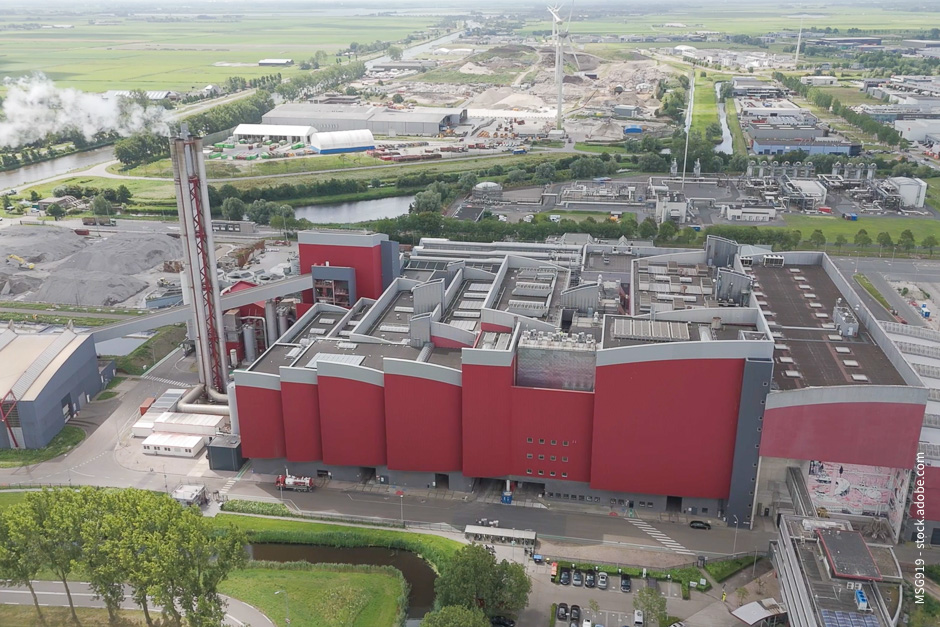
The Alkmaar waste-to-energy plant is enhancing its sustainability. A new project significantly cuts natural gas consumption and NOx emissions through an innovative process. Discover how it works.
Key Takeaways
- The Alkmaar Waste-to-Energy Plant is reducing natural gas use and NOx emissions through a new project.
- The facility will switch from natural gas heating to steam from its boiler, cutting gas consumption significantly.
- Expected outcomes include a reduction of four million cubic metres of natural gas and 7,000 tonnes of CO₂ annually.
- The deNOx project is in development, with the warm test phase started and completion expected in June 2026.
- This initiative is part-funded by the VEKI scheme, enhancing the plant’s sustainability and efficiency.
The waste-to-energy facility in Alkmaar, operated by HVC, is implementing a project to reduce both nitrogen oxides (NOx) and natural gas consumption for its combustion lines 1, 2, and 3.
During the thermal treatment process, NOx emissions are generated. A catalyst is used to reduce these emissions. Previously, the air for this catalytic process was heated using natural gas. The new system will utilise steam from the plant’s boiler for heating, thereby decreasing the amount of natural gas required for the combustion process.
Project Goals and Efficiency Gains
The deNOx project is currently in the development phase. The anticipated outcomes include a reduction in natural gas consumption by four million cubic metres per year and a corresponding CO₂ reduction of approximately 7,000 tonnes annually. A further objective is to achieve more efficient energy use through the optimisation of heat exchangers.
The project is partly subsidised through the VEKI scheme, which contributes to the investments hvc is making to enhance the sustainability of the three combustion lines in Alkmaar.
Current Status and Timeline
Implementation of the deNOx project commenced in early November during the scheduled maintenance stop of line 3. Following the disassembly of old components, the assembly of the new installation is now underway.
According to its own statements, HVC has already completed the so-called ‘cold tests’, in which cables and components are tested for signal transmission. The ‘warm test phase’ began on 6 December. During this phase, the boiler is heated up in order to start up the heat exchanger with steam. The conversion of line 1 is scheduled to be completed by June 2026, with the conversion of line 2 to follow in 2027.
Andreas Bosma, Installation Manager at AEC Alkmaar, stated: “The deNOx project is a significant step for HVC. We are removing natural gas from the process, reducing CO₂, and making the combustion lines more sustainable. It is technically challenging, but together with all involved teams and partners, we are making it possible.”



Leave a Reply