
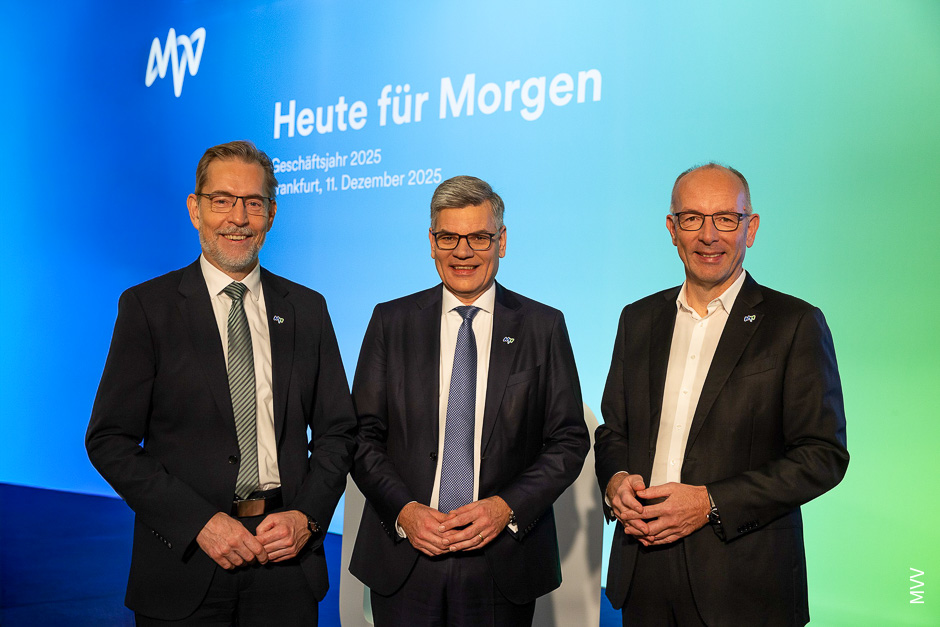
In a challenging market with lower earnings, mvv is channelling a record sum into the green transition. Discover the strategy driving these major investments.
Key Takeaways
- MVV reported an adjusted EBIT of 360 million euros for the 2025 financial year, despite a decline in revenue to 6.1 billion euros.
- The company increased its investment in the green transition to 501 million euros, focusing on heat and electricity transitions, and green customer solutions.
- Key projects include the world’s largest river heat pump in Mannheim and a new Waste-to-Energy plant in England, representing significant investment.
- CEO Gabriël Clemens emphasized the need for a stable political framework to support climate protection and economic viability.
- MVV expects an adjusted EBIT of 200 to 240 million euros for the 2026 financial year and plans to propose a dividend increase.
The Mannheim-based energy company MVV has reported an adjusted EBIT of 360 million euros for the 2025 financial year (1 October 2024 to 30 September 2025). Due to declining wholesale prices, adjusted revenue fell to 6.1 billion euros, compared to 7.2 billion euros in the previous year.
Gabriël Clemens, CEO of MVV, stated that the result was satisfactory given the challenging market environment. The decline from the previous year’s result of 426 million euros was anticipated, as the years 2023 and 2024 were characterised by one-off effects that were not expected to be repeated. A fall in earnings was recorded in the project development and environmental business, as well as due to lower wind yields, while earnings contributions from the generation and grids business segments were positive.
Increased investment in the green transformation
The company’s investment volume rose by 84 million euros in the 2025 financial year to a total of 501 million euros. These funds were channelled into projects for the heat transition, the electricity transition, and green customer solutions, representing one of the highest investment volumes in the company’s history.
The investment focus was on expanding green heat in Mannheim, Germany, constructing and acquiring wind and solar farms, and modernising the distribution grids. For the current financial year, MVV expects a significantly higher investment volume.
Key projects drive the energy transition
In Mannheim, a second river heat pump with a thermal output of up to 165 megawatts is being constructed, which is set to be the world’s largest of its kind upon commissioning in the winter of 2028. Furthermore, MVV is planning to utilise regional geothermal energy. At the Offenbach and Kiel sites, heat generation is also being converted to large-scale heat pumps, which will use waste heat from data centres and water from the Kiel Fjord, respectively.
In the circular economy, a new Waste-to-Energy plant is being built in Wisbech, England. At around half a billion euros, this is the largest single investment in MVV’s history. The plant will process approximately 625,000 tonnes of residual waste per year, generating electricity for around 150,000 households.
Call for a stable political framework
Clemens emphasised the need for a balance between climate protection, economic viability, and security of supply, calling for a reliable political framework. He urged for the swift implementation of the EU Internal Gas Market Directive into national law and argued against an abrupt change in the support scheme for renewable energies.
For the 2026 financial year, MVV expects an adjusted EBIT of between 200 and 240 million euros. A dividend increase of 5 cents to 1.30 euros per share will be proposed to the Supervisory Board.

Leave a Reply