
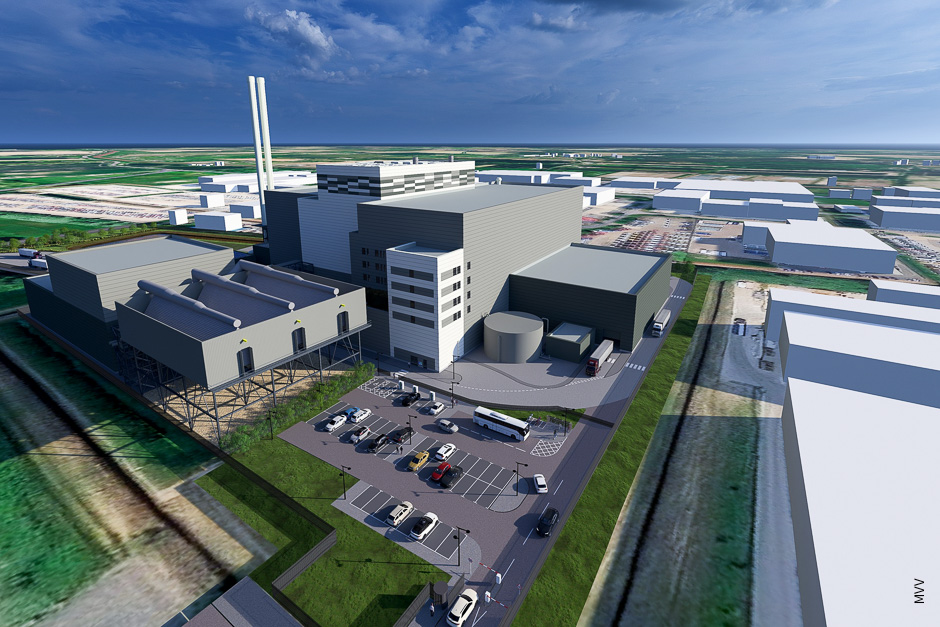
MVV launches its largest UK investment with a new thermal waste treatment facility in Wisbech. Discover how this project could reshape the region’s energy and waste management landscape.
Key Takeaways
- MVV launches its largest UK investment: the MVV Waste-to-Energy-Plant Wisbech, with an investment of approximately half a billion euros.
- The facility will process 625,000 tonnes of waste annually and generate climate-friendly electricity for around 150,000 households.
- Construction begins in 2025, with operations set to commence in 2029, enhancing the region’s energy and waste management landscape.
- This project aims to strengthen MVV’s market position and support the advancement of the British circular economy.
- The Medworth project features a comprehensive closed value chain, relieving landfill sites and promoting regional economic development.
Energy supplier MVV, based in Mannheim, Germany, is expanding its portfolio of thermal waste treatment facilities in the United Kingdom. Construction will soon begin in Wisbech, Cambridgeshire, marking the fourth British site following Plymouth (thermal waste treatment), Ridham Dock (biomass combined heat and power plant), and Dundee (thermal waste treatment).
The Medworth project represents the largest single investment in MVV’s corporate history, with an investment volume of approximately half a billion euros. Due to its high generation capacity, the facility has been classified as a significant infrastructure project and has undergone a national approval process. MVV Environment Medworth Ltd., a project company belonging to MVV’s British subsidiary MVV Environment, will implement and operate the facility. The Swiss green-tech company Kanadevia Inova is responsible for construction.
MVV’s CEO, Dr Gabriël Clemens, states that the Medworth project strengthens MVV’s market position and contributes to the advancement of the British circular economy. The planned facility will double MVV’s capacities in UK and secure an attractive catchment area for this promising market segment.
Largest Investment and Strategic Market Expansion
MVV is processing nearly two million tonnes of non-recyclable waste annually in Germany. Notable examples include the Mannheim combined heat and power plant, operated since 1965, and the Leuna plant, commissioned in 2005. MVV leveraged its extensive expertise to enter the British market in the early 2010s. The Medworth facility, scheduled to commence operations in 2029, will be capable of processing up to 625,000 tonnes of waste per year. This capacity is comparable to the Mannheim plant, which currently processes up to 650,000 tonnes annually.
MVV will generate climate-friendly electricity from non-recyclable household, commercial, and industrial waste in Wisbech, supplying approximately 150,000 households. Additionally, the facility offers the option to provide steam to local businesses, enhancing the region’s attractiveness, particularly for companies with high process heat requirements.
Innovative Circular Economy Concept
Dr Hansjörg Roll, MVV’s Chief Technology Officer, describes the project as a model for modern and resource-efficient circular economy design. The closed value chain, encompassing disposal and energy generation, relieves landfill sites, reduces the emission of climate-damaging methane, and creates new opportunities for regional economic development.
MVV Environment Medworth Ltd. is planning the Medworth project in Wisbech, Cambridgeshire, United Kingdom. Construction is scheduled to begin in 2025, with commissioning planned for 2029. The investment volume amounts to approximately €0.5 billion. The project focuses on thermal waste treatment and electricity generation, with the option to supply steam for industrial and commercial processes. The facility is designed to process 625,000 tonnes of waste per year and will generate electricity for around 150,000 households.



Leave a Reply