
A new report challenges the Dutch government’s plan to increase waste taxes. It proposes shifting the focus to upstream pricing of raw materials to better foster a circular economy.

Key Takeaways
- A report challenges the Dutch government’s plan to increase waste taxes, suggesting a shift to upstream pricing of raw materials instead.
- The Dutch Waste Sector Working Group proposes targeted pricing to support the circular economy and achieve CO₂ reduction while covering a €567 million budget deficit.
- Measures like levies on non-sustainable products and packaging aim to discourage waste and promote circular design principles.
- Political momentum builds as the Dutch House of Representatives supports prioritising these alternatives in the upcoming budget discussions.
- The working group emphasizes that increasing waste costs alone won’t foster circularity; smarter management of raw materials is crucial.
The Dutch Waste Sector Working Group has presented a final report to the cabinet, proposing a shift in environmental taxation. Instead of increasing levies on waste at the end of the chain, the group advocates for targeted pricing of raw materials at the source to advance the circular economy. The report, delivered on 19 December, outlines alternative measures intended to stimulate circularity, achieve CO₂ reduction, and provide the required budget coverage of €567 million.
Shift Away From End-of-Pipe Levies
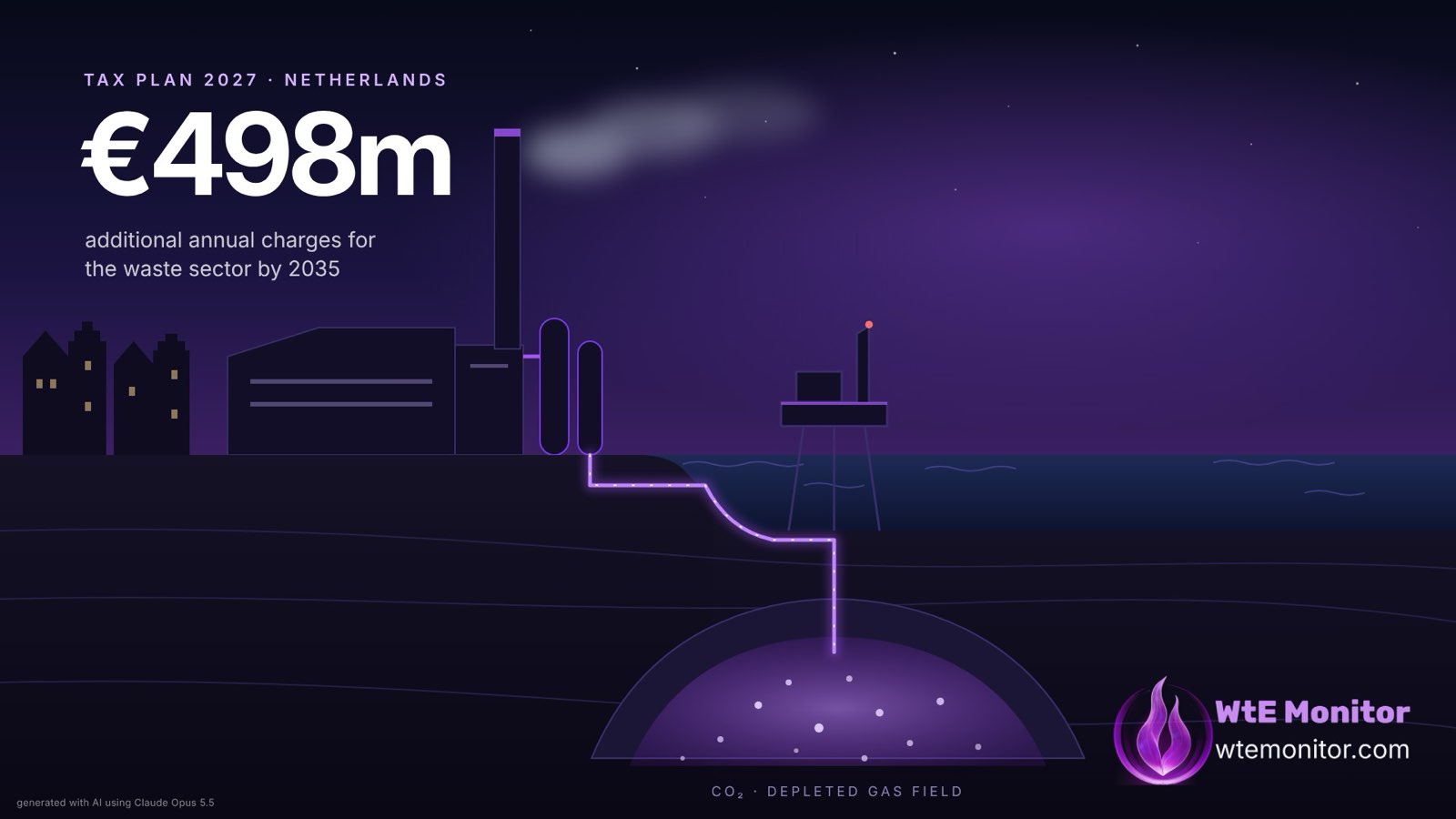
The proposal responds to the government’s plan to cover a €567 million budget deficit. This deficit arose after a planned plastics levy on producers was cancelled at the end of 2024. The government now intends to raise the amount by increasing the waste disposal tax and the CO₂ levy on waste incineration.
The waste sector warns that these measures could lead to diminished recycling efforts, a reduction in domestic processing capacity, potential job losses, and an increase in waste exports. The costs would likely be passed on to municipalities and, ultimately, to residents through higher waste collection charges.
A Call For Upstream Responsibility
The working group, comprising representatives from waste processors, recyclers, industry associations, and local authorities, advises the government to exchange the planned tariff increases for levies on non-sustainable products and primary raw materials.
“What binds this working group is the conviction that circularity does not primarily arise from making waste more expensive, but from smarter handling and making raw materials scarcer,” stated Gertjan Lankhorst, independent chairman of the working group. He explained that the key to reducing waste streams and improving material quality lies in placing incentives at the beginning of the chain, including the design, production, and import stages.
Proposed Alternative Measures
The report details a package of alternatives that shifts responsibility to the front of the value chain. The working group asserts that these measures will generate sufficient revenue to meet the cabinet’s budgetary requirement and restore the ‘polluter pays’ principle.
The proposals set out a range of measures designed to support the transition towards a more circular economy. They envisage targeted pricing for packaging, aiming to discourage the use of single-use and poorly recyclable materials while encouraging circular design principles and an increased use of recyclate. In addition, a levy on batteries, linked to collection performance, is intended to create a financial incentive for their return. This measure is regarded as essential for retaining critical raw materials and for preventing fires and environmental damage within the waste management chain.
The proposals further include the introduction of pricing mechanisms for primary and fossil raw materials such as sand, gravel, clay, and peat, with the objective of making secondary and circular alternatives more economically attractive. Finally, a levy on (nitrogen) fertiliser is proposed to reduce the reliance on fossil-based inputs in agriculture and to promote the adoption of circular fertilisers.
Political Developments And Outlook
In response to lobbying from the sector, the Dutch House of Representatives passed the ‘Stultiens motion’ with a large majority on 19 December. The motion requests that the government prioritise the working group’s alternatives in the upcoming spring budget discussions, focusing on levies on fossil and linear consumption and production. The working group has called upon the cabinet to give these alternatives serious consideration.
Read More
Ask WtE Monitor
Answers come only from WtE Monitor articles and plant data, with sources. Ask in any language.
Your question is processed by Anthropic to generate the answer. Please do not enter personal data. Privacy policy
3 questions a month with a free subscription, unlimited with WtE Monitor+. Subscribe free · Get WtE Monitor+


Leave a Reply