
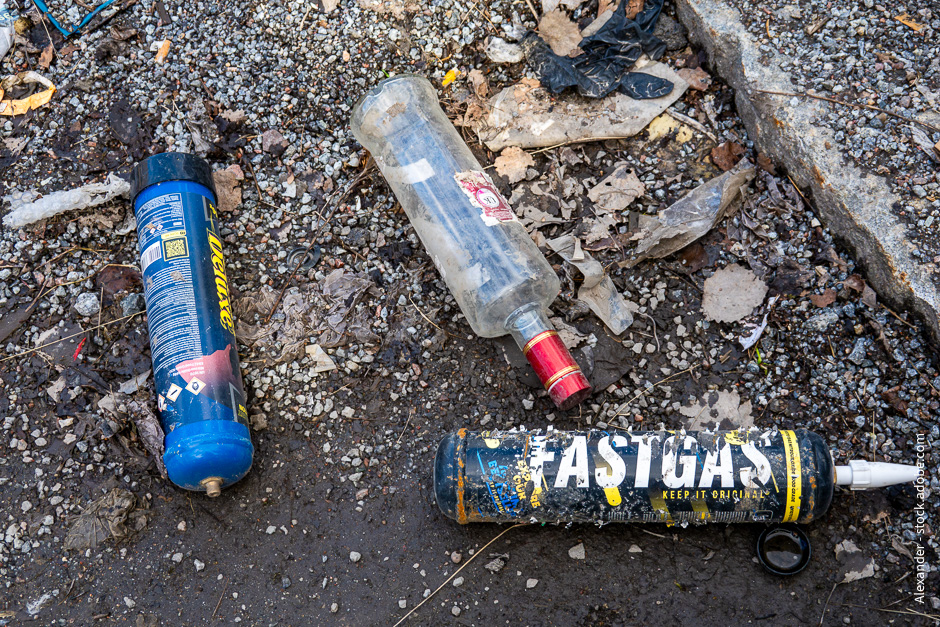
New rules on nitrous oxide aim to protect youth in Germany – but what do they mean for waste management? Discover why industry experts warn: bans alone may not solve the explosive problem.
Key Takeaways
- Germany’s new nitrous oxide rules aim to protect youth but may not fully address waste management issues.
- The amended law prohibits minors from acquiring nitrous oxide and bans sales to them, but exemptions exist for certain uses.
- Industry experts advocate for comprehensive solutions like deposit systems to ensure proper disposal and avoid operational hazards.
- The sales ban alone may not prevent dangerous incidents in waste facilities, as improper disposal can still occur.
- A holistic approach with technical safety standards and incentivised return systems is essential to resolve ongoing risks.
On 2 July 2025, the German Federal Cabinet adopted an amendment to the New Psychoactive Substances Act (NpSG) aimed at curbing the misuse of nitrous oxide (N₂O) and so-called “date rape drugs” (Gamma-Butyrolactone, GBL, and 1,4-Butanediol, BDO). The primary objective is to protect children and adolescents from the severe health risks associated with nitrous oxide consumption, which can result in neurological damage and other serious consequences.
Specifically, nitrous oxide cartridges containing more than 8 grams will now fall under the handling prohibition of § 3 NpSG. For minors, acquisition and possession are prohibited, and sales to this age group, as well as sales via vending machines and online retailers, are banned. Notably, recognised commercial, industrial, or scientific uses, as well as medical applications, are exempt from these restrictions.
Industry Response and the Need for Comprehensive Solutions
Anja Siegesmund, President of the BDE (Federal Association of the German Waste, Water and Raw Materials Management Industry), welcomed the proposal from the Ministry of Health but simultaneously called for more extensive measures to relieve the waste management sector. She emphasised: “It is good that children and adolescents will be prohibited from accessing nitrous oxide and that sales channels are being restricted. However, the Federal Government should also advocate for a European-wide ban to prevent illegal imports from the outset. Beyond the significant health risks, nitrous oxide cartridges pose a growing problem for the waste management industry. Due to their high risk of explosion, these cartridges increasingly endanger waste workers and repeatedly cause serious damage to waste treatment facilities.”
Siegesmund further argued that a ban alone is insufficient from the BDE’s perspective: “Consumption by young adults results in more nitrous oxide cartridges being carelessly discarded in nature or improperly disposed of in household waste, street bins, or, if not fully emptied, in recycling bins. This improper disposal increases the risk of explosions in waste collection vehicles, sorting and treatment facilities, and thermal waste treatment plants.” To address this, the BDE advocates for a substantial deposit on gas cylinders from 200 ml upwards, providing a real incentive for consumers to return cartridges to retailers for proper disposal. Additionally, mandatory emptying and overpressure valves on cylinders are suggested as further solutions.
The Association of Municipal Enterprises (VKU) has also explicitly supported the government’s decision to largely ban the sale of nitrous oxide to private consumers. VKU views the amendment to the NpSG as a crucial step, not only in combating nitrous oxide misuse but also in enhancing safety within waste management facilities.
Operational Risks and the Call for a Deposit System
Uwe Feige, VKU Vice President and Head of Kommunalservice Jena, warned: “Empty or partially filled nitrous oxide cartridges are increasingly ending up in residual waste or public bins, with sometimes severe consequences. In incineration plants, collection vehicles, and sorting facilities, pressurised cartridges can cause explosions and fires, endangering staff and causing significant technical damage.” The frequency of such incidents has risen sharply in recent years, with improper disposal leading to operational disruptions, repair costs, and downtime. The VKU, alongside other waste management associations, has long highlighted this issue and advocated for a general deposit obligation on metal-walled gas cartridges.
Feige added: “The sales ban will significantly reduce the availability of nitrous oxide cartridges in everyday life. What is crucial now is that the new regulations are effectively enforced and violations are consistently prosecuted.” VKU sees the legislative amendment as a vital contribution to strengthening disposal security, protecting employees, and preventing damage to critical infrastructure.
Persistent Dangers in Thermal Treatment Plants
The ITAD (Association of Thermal Waste Treatment Plants in Germany) has welcomed the sales ban but warns that explosions in thermal waste treatment plants will persist if large cartridges without technical safety standards continue to be disposed of in residual waste. Experience from other EU countries shows that a ban without a deposit system does not reduce the number of large cartridges in residual waste.
Larger cartridges cause enormous damage in facilities, leading to operational outages and jeopardising supply and disposal security in Germany. ITAD cautions against overestimating the effect of sales bans on larger nitrous oxide cartridges, especially if supplementary measures such as take-back systems or technical safety standards are not implemented. Furthermore, the ban must be cross-border: the EU has recently adopted Delegated Regulation 2025/1222, which classifies nitrous oxide as a Category 1B reproductive toxicant and effectively prepares a ban on sales to private individuals, effective from 1 February 2027.
Towards a Holistic Approach: Deposit Systems and Technical Standards
Background data indicate that partially emptied nitrous oxide bottles with fill volumes between 600 g and 2,000 g are increasingly entering thermal waste treatment plants via household waste, where they can explode under high temperatures rather than being properly disposed of at recycling centres. Following a ban, it is anticipated that a black market for large cartridges may emerge, or that they will be channelled through commercial sectors, leading to continued improper disposal in residual waste.
Dr Bastian Wens, Managing Director of ITAD, commented: “A sales ban is an important first step, but without accompanying measures, the problem of explosions in thermal waste treatment plants will not be resolved. We call for a supplementary deposit system for large cartridges in the commercial sector, as well as legally mandated safety standards such as overpressure protection to prevent explosions.”
A recent ITAD survey (Spring 2024) revealed that 57 per cent of thermal waste treatment plants reported increased explosions, with 45 per cent noting rising damage. Some facilities now experience up to ten times more overpressure incidents than two years ago, resulting in damage to incineration grates, linings, and heat exchangers, costly repairs, and operational interruptions affecting district heating supply.



Leave a Reply