
Brightly coloured cartridges, hidden dangers: Why nitrous oxide misuse is creating new challenges for health, the environment and waste treatment. Discover the risks and industry response.
Key Takeaways
- Nitrous oxide misuse, often found in colourful cartridges, poses significant health risks, particularly for young users.
- Improper disposal of nitrous oxide cartridges creates challenges for urban waste management, risking safety in treatment facilities.
- Thermal waste treatment plants face operational risks due to exploding cartridges, leading to costly downtime and safety hazards for workers.
- Industry response includes campaigns for better disposal practices and regulatory measures, including sales restrictions and deposit systems.
- Collaborative efforts between waste management, addiction prevention, and the public aim to mitigate risks surrounding nitrous oxide misuse challenges.
Nitrous oxide, often referred to as “laughing gas”, is increasingly present in the urban environment in the form of brightly coloured cartridges and balloons. Despite its playful appearance and misleading name, the substance poses significant risks. Originally used as an anaesthetic in dentistry and as a propellant in whipped cream dispensers, nitrous oxide has become a popular recreational inhalant, particularly among young people. The misuse of these cartridges, especially when combined with other substances, leads to considerable health hazards, including oxygen deprivation and loss of consciousness.
Recent findings from the MoSyD study 2024 in Frankfurt/Main indicate that, in 2023, 14 per cent of adolescents aged 15 to 19 had tried nitrous oxide at least once, with 3 per cent having used it in the past 30 days. The trend is particularly concerning due to the potential for overdose when nitrous oxide is consumed alongside other substances. The prevalence of use highlights the need for targeted prevention and education, especially for younger demographics.
The improper disposal of nitrous oxide cartridges presents a growing challenge for urban cleanliness and waste management infrastructure. In Berlin, the Berliner Stadtreinigung (BSR) reports that these cartridges are frequently discarded in public spaces or incorrectly placed in residual waste bins. This practice not only undermines efforts to maintain city cleanliness but also introduces significant risks to waste treatment facilities.
Operational Risks for Thermal Waste Treatment Plants
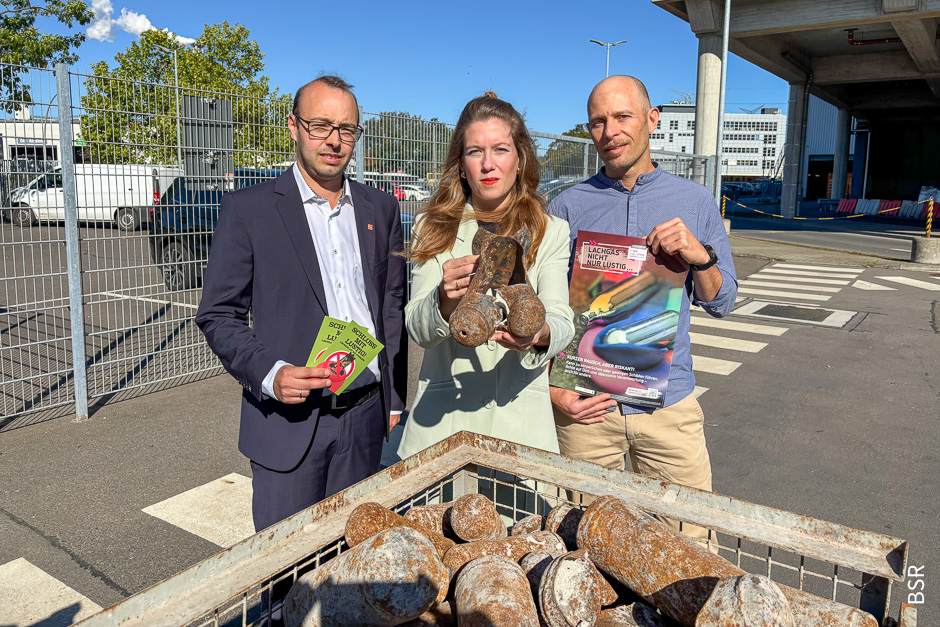
For the BSR and other waste management companies across Germany, nitrous oxide cartridges have become a serious safety concern in thermal waste treatment plants. The BSR collects approximately 125 cartridges daily during waste incineration processes. Many of these cartridges are only partially emptied and are disposed of improperly, entering thermal treatment facilities unnoticed. When exposed to high temperatures in incineration plants, these pressurised containers can explode.
Such incidents have direct consequences for plant operations. In the Waste-to-Energy-Plant in Berlin-Ruhleben, for example, explosions caused by nitrous oxide cartridges led to 760 hours of operational downtime by mid-September 2025. These events result in costly damage to equipment and pose a significant safety risk to employees working at these facilities.
The increased frequency of such incidents underscores the need for effective preventive measures and public awareness campaigns. The safety of plant personnel and the reliability of waste treatment infrastructure are at stake, necessitating coordinated action across the sector.
Industry Response and Calls for Regulatory Action
In response to these developments, the Interessengemeinschaft der Thermischen Abfallbehandlungsanlagen in Deutschland (ITAD), the association of the waste-to-energy plant operators in Germany, launched a campaign in 2025. The campaign aims to inform the public about the risks associated with nitrous oxide cartridges and to promote correct disposal practices. ITAD emphasises that simply banning sales, as currently planned in Germany, is insufficient to address the problem. Instead, a comprehensive package of measures is required.
Annika Belisle, spokesperson for ITAD, advocates for a combination of sales restrictions, a deposit system, and mandatory labelling on products to ensure cartridges are safely returned to the recycling loop. This approach mirrors existing systems for CO2 and propane gas cylinders, which have proven effective in other contexts.
Prevention, Education, and Shared Responsibility
Experts from addiction prevention and waste management sectors stress the importance of robust prevention strategies and clear communication. Marc Pestotnik from the Berlin Centre for Addiction Prevention highlights the need for stricter regulation of nitrous oxide availability to protect youth health. He calls for reliable access to educational resources and sustainable funding for prevention programmes.
Martin Rudolf Renner, Head of Thermal Waste Treatment at BSR, underscores the importance of cross-sector collaboration in addressing the issue. He urges individuals to avoid nitrous oxide use altogether, particularly to prevent harm among children and adolescents. Renner also appeals to consumers’ sense of responsibility, reminding them that nitrous oxide cartridges are not harmless residual waste. Improper disposal can cause severe and costly damage to waste treatment facilities and endanger staff due to the risk of explosion.
The collective efforts of BSR, ITAD, and addiction prevention specialists demonstrate the necessity of coordinated action and shared responsibility. Only through comprehensive education, regulatory measures, and industry cooperation can the risks associated with nitrous oxide use and disposal be effectively mitigated.



Leave a Reply