
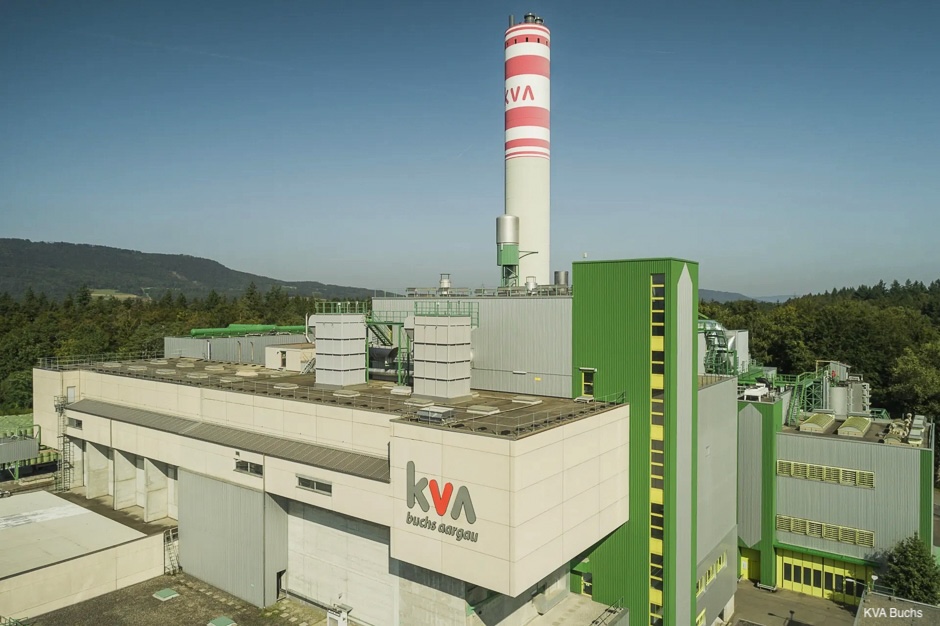
KVA Buchs processed over 142,000 tonnes of waste in 2025 and recorded a near-breakeven financial result – but the headline story is what is coming next.
Key Takeaways
- KVA Buchs processed 142,000 tonnes of waste in 2025, achieving near-breakeven with CHF 29 million in revenues.
- District heating revenues rose by 8.8%, while electricity income fell; major infrastructure projects are in progress.
- The CHF 20 million turbine replacement project aims to boost electricity output by autumn 2026.
- Challenges in carbon capture and residue disposal affect long-term planning, complicating operations at the facility.
- The association is building strategic financial reserves, aiming for CHF 100 million, with over CHF 60 million already accumulated.
The KVA Buchs waste-to-energy facility in the Swiss canton of Aargau closed its 2025 financial year with revenues of nearly CHF 29 million and a modest net surplus. Behind those headline numbers, however, lies a year of contrasts: district heating revenues rose sharply while electricity income fell, a CHF 20 million infrastructure project is now well under way, and a series of unresolved questions, from carbon capture costs to residue disposal, are reshaping the outlook for the facility and the 104 municipalities it serves.
A Year of Shifting Energy Revenues
The facility’s two furnace lines ran at near-maximum availability throughout 2025, yet the financial result came in below budget. The reasons behind that gap, and the role that falling electricity spot prices played, are set out in detail in our company report, alongside a breakdown of how the association is positioning itself for a market that looks very different from just two years ago.
District heat sales tell a different story: output rose by 8.8 per cent to over 144,000 MWh, driven by an expanding network of industrial and municipal customers. A major infrastructure project to quadruple hot water storage capacity is nearing completion, with further expansion already in the pipeline.
The CHF 20 Million Question
The turbine replacement project, the largest single investment in the facility’s recent history, moved from planning into construction in 2025. With commissioning targeted for autumn 2026, the new unit promises to increase electricity output for thousands of additional households. The full report details the engineering challenges encountered, the grid reinforcement works required, and the timeline risks that remain.
Also in test operation throughout 2025: a hydrogen plant whose path to regular service has proved more complicated than anticipated. Whether it will deliver on its original promise is a question the full report addresses in full.
Carbon Capture, Residue Disposal and Strategic Reserves
Two issues loom largest over the association’s longer-term planning. The first is carbon capture and storage: discussions are under way at national level, but the association’s own assessment of what CCS would mean for incineration tariffs makes for striking reading. The second is residue disposal: a year marked by regulatory changes, a difficult supplier relationship and a lost recycling outlet that together illustrate the operational complexity of running a waste-to-energy plant at scale.
Meanwhile, the association continues to build its strategic financial reserves, with a long-term investment fund now standing at over CHF 60 million on its way to a CHF 100 million target.


Leave a Reply