
Quieter fans, cooler steam and a permit that clears the way: Darmstadt’s Waste-to-Energy plant is being rebuilt piece by piece. What is changing on the roof – and what disappears altogether?

Key Takeaways
- Darmstadt’s regional council has approved the upgrade of air condenser 3 and the hybrid coolers at the Waste-to-Energy plant.
- Structural changes and low-noise fans raise thermal output and cut night-time noise.
- Four rooftop hybrid coolers will be replaced by quieter, more efficient units.
- **Air condenser 2 **runs until the new units start, then is dismantled; unit 1 went earlier.
- Line 4 first fired waste in May 2026; sludge line 5 follows in 2028.
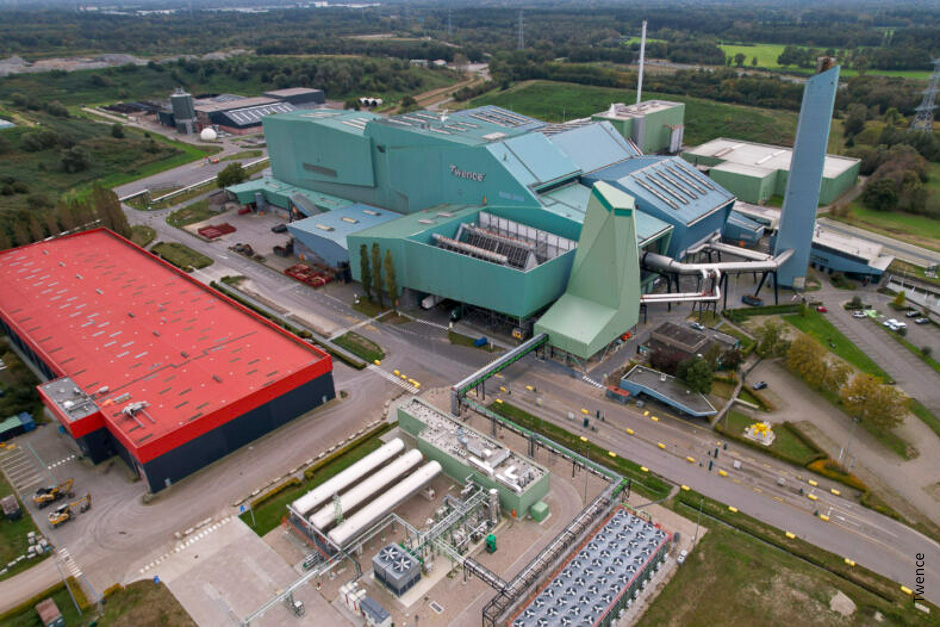
The Darmstadt regional council has approved the upgrade of air condenser 3 and of the hybrid coolers at the Darmstadt Waste-to-Energy plant. The permit allows Entega to carry out modernisation work at the site. This work raises energy efficiency. Moreover, it reduces noise for local residents.
“With this permit we are creating the basis for the further technical modernisation of the Darmstadt Waste-to-Energy plant as one of the most important disposal facilities in southern Hesse. At the same time we are ensuring that the protection of people and the environment continues to meet the high applicable requirements,” said Hilligardt. He thanked Entega for its cooperation. He also thanked his staff for their work on the permit procedure.
Klaus Peter Schellhaas, district administrator and chairman of the association, said the permit was a further step towards making the plant fit for the future. The association carries responsibility for safe, economical and sustainable waste recovery in southern Hesse, he said. Furthermore, investment in modern plant technology secures long-term operation at the site. It also creates the basis for meeting rising requirements.
“For Darmstadt the Waste-to-Energy plant has a twofold significance: as an important waste recovery site and as a reliable anchor of municipal heat supply. The measures now approved help us to continue making this contribution efficiently and responsibly,” said Julia Klinger, board member for personnel and infrastructure at Entega.
How the Cooling Systems Work
An air condenser cools steam from the power plant process using air and condenses it back into water. Hybrid coolers work with both air and water, which allows them to cool efficiently and flexibly. Both systems matter for the operation and the environmental performance of the plant.
The renewal of air condenser 3 is a central element of the work. Structural changes and new low-noise fans improve air circulation and increase the maximum thermal output. At the same time, noise exposure in the surrounding area falls, particularly at night. This happens when the fans run at reduced speed.
The four existing hybrid coolers on the roof of the plant will also be replaced by modern, quieter units. The new coolers cool more efficiently and support the output increase of the air condenser.
Older Units to Be Dismantled
Air condenser 2 remains in operation until the new units are fully commissioned and will then be dismantled. Air condenser 1 was taken out of service and dismantled some time ago. The performance data and the remaining operation of the Waste-to-Energy plant are unchanged.
The conversion and modernisation of the plant were approved in December 2023 by the Darmstadt regional council under section 16 of the federal immission control act. Alongside the existing incineration line 3, a new incineration line 4 is being built. This line fired waste for the first time on 13 May 2026. In addition, a new line 5 for sewage sludge treatment is scheduled to enter service in 2028. The older incineration lines 1 and 2 are being taken out of service. They are being dismantled step by step.
The Darmstadt Waste-to-Energy plant is owned by the Zweckverband Abfallverwertung Südhessen (ZAS). Entega is responsible for operations as the operating company.
“With this modernisation we are setting an important milestone for the plant. We are investing in technology in order to position the site sustainably and securely for the future,” said Markus Sattler, overall project manager at Entega.
Read More
Ask WtE Monitor
Answers come only from WtE Monitor articles and plant data, with sources. Ask in any language.
Your question is processed by Anthropic to generate the answer. Please do not enter personal data. Privacy policy
3 questions a month with a free subscription, unlimited with WtE Monitor+. Subscribe free · Get WtE Monitor+

Leave a Reply